Coaching · for neurodiverse humans

Most of what changes people isn't advice. It's being fully seen.

I sit with late-diagnosed, high-masking, formerly over-functioning people (founders, engineers, and other tender overachievers) and pay very close attention. The mask comes off on its own. What's underneath is usually the point.

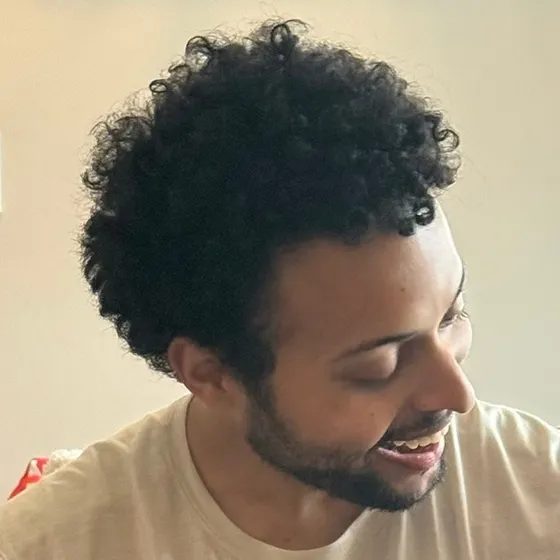
Christopher Smothers laughing, looking downhi, I'm Chris · he/him · San Francisco

A session

What actually happens when we sit down

We talk. I listen with my whole nervous system, not just my ears. I notice what your body is doing while you say the reasonable version of things. Sometimes I say what I notice. Sometimes we just stay there.

There's no worksheet and no framework to memorize. When it helps, I'll bring in somatic work, meditation, or qigong, all things I practice myself, so you can feel a state rather than think about it.

People tend to leave a session feeling more like themselves than when they arrived. That's the whole product.

"I once sat across from a stranger in a circling group. I didn't coach her, didn't fix anything. I just stayed with her, eyes open, until something in her woke up. She made a big expressive stretch, looked mischievously around the room capturing all of our attention, found my eyes and said, 'I'm a goddess.'"

I didn't need a certification for that. Presence did the work. Everything else I offer is built around protecting that.

"Nice talking to you, man. That was really helpful. I feel much more connected to my Eros now, and my heart."
Nick · after our first session

Who I work with

This might be for you if…

You were diagnosed (or self-recognized) late, autistic, ADHD, or both, and you're re-reading your whole life through that lens.
You masked so well nobody believed you were struggling, right up until your body stopped cooperating.
You're a founder or work in tech, and the intensity that built your career is the thing burning you down.
You're relearning the basics on your own terms: food, sleep, movement, rest, relationships, with a nervous system that has opinions.
You've made yourself smaller for so long that taking up space feels physically wrong, and you're ready to find out what happens if you do it anyway.
You want someone who will actually say the thing, kindly, instead of nodding along.

My story

High-functioning, until I wasn't.

On paper it looked great: Ivy League degree, two venture-backed companies, one acquisition, teams I loved leading. I was the person who could hold it all. What nobody could see, including me, was how much of that was over-functioning: a nervous system running hot for decades, masking so smoothly it looked like talent.

I learned early to flatten my own reactions so other people would stay comfortable. I got so good at reading a room and managing it that I lost track of what I actually felt. For fifteen years with my former partner, eight of them married, I knew her needs better than my own. We're divorced now, and still friends, which I count among the things I'm proudest of.

At 35 I was diagnosed autistic and ADHD. The diagnosis didn't change me; it explained me. It arrived alongside a burnout deep enough that I stepped away from work for three years to relearn how to eat, sleep, move, and relate, this time with my body instead of against it. I'm open about the whole cocktail: autism, ADHD, ARFID, SDAM, OCD, CPTSD.

The edge I'm working now is taking up space. Saying the true thing before the safe thing. Letting a feeling move through instead of intellectualizing it. Some people find that intimidating, and I've stopped treating that as a problem to solve. Making myself small kept everyone around me small too.

I'm not a therapist and won't pretend to be one. I'm a few years further down a road you might be on, with a founder's toolkit, a somatic practice, and a lot of hours spent learning to stay present with people while they find themselves.

How I work

Presence first. Body second. Frameworks last, if ever.

01

Witnessing without judgment. Most people have never been fully attended to without someone wanting something from them. That alone rearranges things.

02

Nervous system before narrative. Before we optimize anything, we learn what regulation and dysregulation actually feel like in your body, and build from there.

03

I'll say the thing. Naming what's in the shadow is something I'm unusually good at, and I do it with care. You'll never wonder what I really think.

04

Unmasking at your pace. Masking kept you safe. We don't rip it off; we make places where you don't need it, and let it get lighter from there.

05

Systems, not willpower. I spent a career building systems for teams. When you're ready, we'll build ones for your life, designed for the brain you have, not the one you were pretending to have.

Working together

It starts with a conversation, not a form

A gifted session

Our first session is a gift, not a sales call. A real hour of the actual work, so you can feel what it's like instead of reading about it. If I'm not the right fit, I'll say so and point you somewhere better.

Ongoing 1:1

Regular sessions for life during and after burnout: unmasking, nervous-system literacy, food and movement that work for your body, and relationships that don't require a performance.

Founders & people in tech

Building a company or career that runs on your actual operating system: energy over hours, honest ambition, delegation you can trust, a pace your body can sustain.

PricingSliding scale. Money shouldn't be the reason you keep white-knuckling it alone.
TrainingCurrently completing ICF-accredited coach training.
FormatVideo sessions, from wherever you are.

Come as you are. Mask optional.

Write me a few lines about where you are, or better yet, send me a voice memo. I read and listen to everything and reply myself. If it feels like a fit, we'll find a time to sit down.

@becomingbabyman on both

Christopher Smothers · San Francisco, CA · coaching is not therapy or medical advice